BEFORE YOU DECIDE
Why Did My Bespoke Website Not Bring In Better Results?
Part of the confusion comes from the way websites are described.
A template website usually starts from something that already exists.
A customised website might take an existing structure and make changes to it.
A bespoke website is usually designed specifically for the business, without simply dropping content into a pre-made template.
A fully custom-coded website is something different again, where far more of the functionality and experience is built from scratch.
Most business owners do not need to know every technical distinction.
But they do need to understand one important point.
Custom design does not automatically mean custom strategy.
A website can be designed from scratch without the SEO being properly planned.
These are two completely different skills.
It can have custom visuals without the buyer journey being properly mapped.
It can have bespoke page layouts without the content being written to convert.
It can feel more expensive without being more commercially effective.
That is why the word bespoke or custom can become misleading.
Not because it is always used dishonestly.
But because the business owner often attaches a bigger meaning to it than the project actually includes.
They think they are buying a website built around growth.
What they may actually be buying is a website built around appearance.
This article explains why a bespoke website can look better without bringing in better business results. It outlines how SEO, trust, conversion, customer focused content and commercial strategy can affect performance, and why bespoke design alone does not guarantee more enquiries. Whether you are disappointed by a recent website redesign or reviewing your current website, this guide explains what may be limiting results and what a performance led website needs to do differently.
Key Takeaways:
WHY A BESPOKE WEBSITE CAN STILL UNDERPERFORM
- Bespoke design does not automatically mean bespoke strategy (1)
- A redesign will not fix an unresolved SEO problem (2)
- A polished website can still fail to turn visitors into enquiries (3)
- A performance led website starts with the buyer and the outcome (4)
A better looking website only becomes a better business investment when design, visibility, trust and conversion are working towards the same commercial goal.
THE Question
Why Did My Bespoke Website Not Bring In Better Results?
A bespoke website usually feels like the upgrade.
It feels like the decision you make when you want the website to look better, feel better and represent the business properly.
You weren’t looking for the cheapest option.
You weren’t asking for a quick template with your logo dropped in.
You weren’t trying to get something live just for the sake of having a website.
You invested more because you expected more.
More care.
More thought.
More quality.
More attention.
And, most importantly, better results.
That is usually the point.
A business does not normally pay for a bespoke website because it wants something that simply exists.
It pays for one because it wants the website to do a better job than the old one.
Look better.
Feel more professional.
Represent the business properly.
Create a stronger impression.
And help the business grow by bringing in more enquiries.
So when the website goes live, three to six months pass, maybe even twelve to eighteen months, and the results do not really change, it can feel difficult to understand.
Especially when the only obvious difference is the odd comment from a friend, family member or existing customer saying:
“That looks lovely.”
But lovely does not get leads.
Lovely does not grow your revenue.
Lovely does not justify the reason behind your investment.
Because everything about the decision felt sensible.
The website looks better.
The brand feels sharper.
People might compliment it.
The agency might have delivered exactly what was agreed.
You might even feel genuinely proud of it.
But the phone is not ringing more.
The forms are not coming through more often.
The quality of enquiries has not improved.
The website may look like an upgrade, but the business does not feel like it has moved forward.
That is where the frustration starts.
Because if bespoke was supposed to mean better, why did it not bring better results?
The answer is usually not that the business was wrong to invest.
It is usually that the word “bespoke” was carrying more expectation than it should have been carrying.
You did not invest in a website built around better commercial performance.
You invested into a bespoke design.
That is a very different thing.
THE EXPECTATION
“Bespoke website” sounds like it should mean better
The word bespoke carries weight.
It sounds premium.
It sounds more considered.
It sounds like more time has been spent.
It sounds like the opposite of cheap, basic or generic.
And in most areas of life, that is how people understand it.
A bespoke suit sounds better than something off the rail.
A bespoke kitchen sounds better than something flat-packed.
A bespoke staircase sounds better than something standard.
So when a business owner hears “bespoke website,” it is natural to assume the same thing.
Better website.
Better quality.
Better fit.
Better outcome.
And that assumption makes sense.
If you are spending more, you expect the thing to be more suited to you.
You expect more thought to have gone into it.
You expect it to be built around your business rather than squeezed into something that already exists.
The problem is that, in website projects, bespoke can mean different things to different people.
To the business owner, bespoke often means:
“This website will be built around my business, my customers, my goals and the results I need.”
To the website provider, bespoke may simply mean:
“This website will be designed uniquely for your brand rather than built from a standard template.”
Both can be true.
But they are not the same promise.
One is about commercial performance.
The other is about design.
That gap is often only obvious after launch.
THE DISTINCTION
The bespoke part is usually design, not outcome
This is where many business owners get caught.
They hear bespoke and assume the whole thing has been thought through from every angle.
The visuals.
The structure.
The SEO.
The customer journey.
The conversion path.
The content.
The proof.
The calls to action.
The way the site will actually generate enquiries.
But often, the bespoke part is mainly the look and feel.
The layout is designed from scratch.
The colours match the brand.
The pages can look unique.
The homepage can feel more premium.
The site does not look like a standard template.
That can be valuable.
But it does not automatically mean the website has been built around the outcome the business needed.
Because a website can be bespoke from a design point of view and still generic from a commercial point of view.
It can be unique visually, but still weak strategically.
It can be custom-designed, but still not properly planned around traffic, trust, conversion or buyer behaviour.
It can look completely different from your competitors while still failing for the same reasons their websites fail.
That is the distinction that matters.
The website may have been bespoke to your brand.
But was it bespoke to your customer’s decision-making process?
Was it bespoke to the searches your buyers actually make?
Was it bespoke to the objections they have before enquiring?
Was it bespoke to the result you wanted from the investment?
If not, it may have solved the wrong problem.
We see this a lot when businesses come to us after investing in a better-looking website.
The site looks more polished.
The business looks more professional.
But once you look underneath the design, the commercial thinking is thin.
The website was customised around how the business wanted to look, not how the customer needed to buy.
people ALSO READ: How a tree surgeon business got booked 9 months ahead ➜
DESIGN VS STRATEGY
Custom design does not automatically mean custom strategy
Part of the confusion comes from the way websites are described.
A template website usually starts from something that already exists.
A customised website might take an existing structure and make changes to it.
A bespoke website is usually designed specifically for the business, without simply dropping content into a pre-made template.
A fully custom-coded website is something different again, where far more of the functionality and experience is built from scratch.
Most business owners do not need to know every technical distinction.
But they do need to understand one important point.
Custom design does not automatically mean custom strategy.
A website can be designed from scratch without the SEO being properly planned.
These are two completely different skills.
It can have custom visuals without the buyer journey being properly mapped.
It can have bespoke page layouts without the content being written to convert.
It can feel more expensive without being more commercially effective.
That is why the word bespoke or custom can become misleading.
Not because it is always used dishonestly.
But because the business owner often attaches a bigger meaning to it than the project actually includes.
They think they are buying a website built around growth.
What they may actually be buying is a website built around appearance.
COMMERCIAL IMPACT
If your marketing is not doing those things, your spend is not doing its job
A bespoke website can absolutely improve how a business presents itself.
It may look more modern than the old site.
It may feel more credible.
It may make the business look more established.
It may give referrals more confidence when they check you out.
It may make the team feel prouder to send people to it.
It may remove the embarrassment of an old, outdated or clunky website.
That matters.
A poor-looking website can damage trust quickly.
People do make fast judgements online.
If your website looks neglected, broken or behind the times, some visitors will leave before they even understand what you do.
So design does absolutely have a role.
But a visual upgrade is not always a commercial upgrade.
A visitor can like the look of your website and still not enquire.
They can think the site looks professional and still not trust you enough.
They can admire the design and still not understand why they should choose you.
They can spend a few minutes on the site and still go back to Google to compare someone else.
That is because looking better is only one part of the job.
A website also has to help the right people find you.
It has to explain what you do in a way that makes sense to them.
It has to build confidence.
It has to reduce doubt.
It has to make the next step feel easy.
It has to turn attention into action.
Design can support all of that.
But design does not replace all of that.
HIDDEN PROBLEMS
A good-looking website can make the problem harder to see
This is the awkward part.
A bad website is easy to blame.
If it looks old, broken, messy or untrustworthy, everyone can see the issue.
But a good-looking website can make the problem less obvious.
It gives the impression that the important work has been done.
The business looks professional.
The pages look tidy.
The brand feels stronger.
The site feels more modern.
So when the results do not improve, it becomes confusing.
Because there is no obvious disaster to point at.
The website does not look terrible.
It does not look cheap.
It does not look neglected.
It may actually look very good.
But underneath the surface, the same problems may still exist.
Weak search visibility.
Thin service pages.
Unclear messaging.
Poor proof.
Passive calls to action.
No clear buyer journey.
Weak conversion structure.
Poor measurement.
No proper commercial strategy.
That is why some businesses stay stuck for longer after investing in a bespoke website.
They do not have something obviously bad.
They have something that looks good enough to make the real problem harder to spot.
When we diagnose websites like this, we are not usually looking for whether the homepage is attractive.
We are looking for whether the website has the structure, content, proof, visibility and conversion path needed to create the result the business expected.
That is where the gap usually appears.
THE REAL ISSUE
The bespoke website did not fail because it needed to be more bespoke
If your bespoke website has not brought in better results, the issue is probably not that it needed more custom sections.
Or more animation.
Or more visual effects.
Or more unusual layouts.
Or more expensive design details.
The issue may be that the bespoke work was focused on the wrong things.
It was bespoke to the brand.
But not bespoke to the buyer journey.
It was bespoke to how the business wanted to look.
But not bespoke to how the customer makes a decision.
It was bespoke in design.
But not bespoke in strategy.
It was bespoke in appearance.
But not bespoke in outcome.
That is the important distinction.
The result you wanted was not just a nicer website.
You wanted more enquiries.
Better leads.
More trust.
More visibility.
More control.
More return from the investment.
Those things do not appear just because the design is custom.
They have to be planned.
Built.
Measured.
Improved.
And connected to the way real customers search, compare and choose.
WHY IT HAPPENS
The 7 common reasons bespoke websites still fail
When we review bespoke websites that look good but do not generate better results, the same issues usually appear.
The website is rarely failing because of one tiny thing.
It is usually not just the colour of a button.
It is not just one missing testimonial.
It is not just one weak headline.
It is usually because the website was planned around appearance, approval and launch, rather than visibility, trust, conversion and commercial outcome.
The design may have improved.
The brand may feel sharper.
The site may be easier to look at.
But if the deeper problems were not fixed, the result often stays the same.
These are the most common reasons we see.
BUYER FOCUS
1) The website was built around what you liked
During the build, everything can feel like progress.
You see the designs.
You give feedback.
The colours are discussed.
The imagery is chosen.
The homepage is refined.
The layouts are tweaked.
The agency asks what you think.
You say what you like.
They make the changes.
The process feels collaborative.
And that is not a bad thing.
You should like your own website.
You should feel proud of it.
You should feel confident sending people to it.
A website that the business owner hates is unlikely to be used properly.
But there is a difference between being listened to and being commercially guided.
A website can be built around your preferences without being built around your buyers.
You are close to the business.
You know what you mean.
You understand your services.
You understand your industry.
You know why your business is good.
A cold visitor does not have that context.
They are not looking at the website as the owner.
They are looking at it as someone with a problem, a need, a worry, a deadline or a decision to make.
They are asking:
Can this business help me?
Do they understand what I need?
Have they done this before?
Can I trust them?
Are they better than the other options?
What happens if I enquire?
That is the perspective the website has to be built around.
So if the project is mainly judged on whether you approve the design, it can pass every sign-off and still fail the real test.
Because the real test is not whether the business likes the website.
The real test is whether the right customers understand it, trust it and act on it.
BEYOND DESIGN
2) Design was the only thing improved
Good design is valuable.
A strong designer can make a business look more credible, professional and polished.
That should not be dismissed.
But a website that needs to generate enquiries requires more than visual design.
It needs SEO thinking.
It needs conversion thinking.
It needs buyer journey thinking.
It needs content strategy.
It needs commercial understanding.
It needs someone asking how the website will actually create the result the business wants.
Those are different skills.
A designer can do their job well and the website can still underperform.
That does not mean the designer failed.
It may mean the project was never set up with the right commercial responsibility.
If a website is supposed to bring in enquiries, someone needs to be asking:
How are people going to find this site?
What search terms matter?
Which pages need to rank?
What does the buyer need to understand?
What proof do they need to see?
What questions will stop them enquiring?
What should the call to action say?
Where should reviews or case studies appear?
How will we know whether the website is working?
Those questions should not be left until after launch.
They should shape the website before it is designed.
Otherwise, the site can look finished while the commercial thinking is still unfinished.
We see this when a website has clearly had time and creative effort put into it, but the pages still do not answer the questions a buyer needs answered before they enquire.
That is not usually a lack of design effort.
It is a lack of commercial direction.
SEARCH VISIBILITY
3) The SEO problem was not fixed
A bespoke website does not automatically create visibility.
If your old website was not being found by the right people, a new design will not fix that by itself.
You may still not rank for the searches that matter.
Your service pages may still be too thin.
Your location relevance may still be weak.
Your content may still attract people researching rather than people ready to buy.
Your technical foundations may still be poor.
Google may still not have a clear enough reason to show your website above another provider.
That means the new website can launch beautifully and still sit in the same quiet corner of the internet.
It is like improving the shopfront without improving the road to the shop.
You can make the outside look better.
You can make the inside feel more premium.
You can make the whole thing look more impressive.
But if there are no signs, no footfall and no clear route to the door, the improvement is limited.
The same applies online.
If the right people are not finding the website, the design has very little opportunity to do anything.
That is why SEO cannot be treated as an optional extra if the business needs organic enquiries.
It has to be part of the thinking before the website is built.
Not bolted on after everyone realises the new site is not getting seen.
BUILDING TRUST
4) The trust problem was still there
Even when people do find the website, they still have to trust the business enough to enquire.
This is where many websites are weaker than the business behind them.
The business might have great customers.
Strong reviews.
Years of experience.
Good results.
A strong reputation.
Real proof that it can do what it says.
But the website does not always translate that properly.
The reviews might be hidden on a separate page.
The case studies might be vague.
The photos might feel generic.
The content might make claims without proving them.
The website might say “trusted,” “professional” or “experienced,” but those words appear on almost every competitor’s site too.
So they stop carrying much weight.
The trust may exist in the business.
It may exist in referrals.
It may exist in past customer relationships.
But it has not been turned into a clear online journey for someone who does not already know you.
That matters.
A referral arrives with borrowed trust.
A cold website visitor does not.
The website has to earn it.
A bespoke design can make the business look more polished.
But polish is not the same as proof.
And without proof, many visitors will hesitate.
We see this a lot with good businesses that have far more credibility than their website shows.
The business has done the work.
The results exist.
The customers are happy.
But the website does not make that obvious enough for a cautious buyer who is seeing the business for the first time.
ENQUIRY CONVERSION
5) The conversion problem was not resolved
Conversion is not just about having a contact form.
It is not just about where the button sits.
It is not just about whether the button is a bright colour.
Conversion is about whether the page gives someone enough confidence to act.
That is where many good-looking websites fall down.
The page may explain the service, but not why it matters to the customer.
It may list what the business does, but not make the buyer feel understood.
It may include a few reviews, but not use them where they are most needed.
It may have calls to action that say “contact us” or “get in touch,” but give people no clear reason to take that step now.
It may look polished but feel passive.
And when that happens, the failure is quiet.
People do not usually complain.
They do not email you to explain what was missing.
They do not tell you the page failed to build enough trust.
They just leave.
Not because they hated the website.
Not because the design was terrible.
Not because anything was obviously broken.
But because nothing gave them enough reason to move forward.
That is one of the hardest problems to spot.
A website can look fine and still fail to convert.
It can create no obvious friction and still create no action.
It can feel professional and still not make the enquiry feel worth making.
CUSTOMER FOCUS
6) The content was too focused on the business, not the customer
A lot of bespoke websites still make the same mistake as cheaper websites.
They talk too much from the business’s point of view.
We have been established since this year.
We are passionate about what we do.
We offer a professional service.
We have years of experience.
Here are our services.
Here is our team.
Here is our process.
Here is our contact page.
None of that is automatically wrong.
People do need to know who you are and what you do.
But if the website is mainly built around what the business wants to say, the customer has to do too much work.
They have to connect the service to their own problem.
They have to decide whether your claims are believable.
They have to figure out what makes you different.
They have to work out whether you are the right fit.
They have to decide whether enquiring feels safe.
Many people will not do that work.
They will compare someone else.
This is why a website should not just present the business.
It should help the buyer.
If someone walked into a shop, the first thing you would usually ask is:
“How can I help?”
You would not start by talking about how much you spent fitting the shop out.
You would not start by pointing at the counter, the flooring or the signage.
You would focus on the person in front of you and what they need.
A website should do the same.
A bespoke design does not automatically make that happen.
The thinking underneath has to be customer-led.
FALSE CONFIDENCE
7) Launch compliments made the redesign feel more successful than it was
The first few days after a new website goes live can feel positive.
You share the link.
People say it looks great.
Someone says it feels much more like the business.
Someone says the branding looks sharper.
Someone says the old website needed replacing.
That feedback feels reassuring.
And it is not meaningless.
It tells you the website has probably improved how the business is perceived.
But compliments are not enquiries.
Someone saying “that looks great” is not the same as a cold buyer deciding to contact you and spend money.
People who already know you are also not the hardest audience to convince.
They already have context.
They already know the business.
They already have some reason to trust you.
The real test is different.
Can the website help someone who does not already know you?
Can it attract them?
Can it make them feel understood?
Can it prove you are credible?
Can it answer enough of their questions?
Can it make the next step feel clear and safe?
That is what the website needs to do if it is going to create better results.
So while positive feedback after launch can feel good, it can also hide the bigger issue.
The people complimenting the website may not be the people you need the website to convert.
THE REAL COST
These common reasons cost you time, money, energy and trust
This is where the frustration often grows.
The bespoke website goes live.
The results do not improve.
Then the conversation shifts.
You need SEO.
You need ads.
You need more content.
You need landing pages.
You need conversion work.
You need ongoing marketing.
That advice may not be wrong.
The business may genuinely need those things.
But if those things were always needed to get the result, they should have been part of the conversation earlier.
Before the website was designed.
Before the structure was agreed.
Before the content was written.
Before the budget was spent.
Because once the website is live, fixing those missing pieces can become harder and more expensive.
The SEO specialist may look at the site and say the structure needs changing.
The ads specialist may say the landing pages are not suitable.
The copy may need rewriting because it was not built around buyers.
The tracking may not show enough.
The calls to action may need rethinking.
The site may look finished, but the system behind it is incomplete.
That is why businesses can feel like they paid for the main thing, only to find out later that the main thing was never enough on its own.
The issue is not always that the extra services are unnecessary.
The issue is that the website was sold or planned without making the full route to results clear enough.
When we see this happen, the frustration is completely understandable.
The business owner thought they were paying to solve the website problem.
But later, they realise they were only paying to improve one part of it.
Usually the appearance.
Not the full route between being found, being trusted and being chosen.
WHAT WAS MISSING
What business owners usually wish they had understood
Most business owners do not regret wanting a better website.
They regret not knowing what “better” needed to include.
Better did not just need to mean nicer.
It needed to mean more visible.
More trusted.
More useful.
More persuasive.
More measurable.
More likely to turn the right visitors into enquiries.
They wish they had known whether SEO was properly included.
They wish they had understood whether the content was being written for buyers or simply filling pages.
They wish they had asked how the website would attract people who were ready to buy.
They wish they had known whether the calls to action were there because they looked neat, or because they helped people move forward.
They wish someone had explained what would happen after launch if traffic did not increase.
They wish they had understood how results would be measured.
They wish the difference between a design-led website and a performance-led website had been made clearer.
That does not make the original decision stupid.
Most business owners are not website specialists.
They rely on the people they hire to guide them properly.
If they go to a branding-led provider, they will usually get branding-led advice.
If they go to a design-led provider, they will usually get design-led advice.
If they go to an SEO provider, they will usually get SEO-led advice.
The challenge is that a website has to do several jobs at once.
It has to look credible.
It has to be findable.
It has to be clear.
It has to build trust.
It has to convert.
It has to support the wider marketing strategy.
So the real question is not simply:
“Who can build us a bespoke website?”
The better question is:
“Who can help us build the right website for the result we need?”
PERFORMANCE FIRST
What a performance-led website needs to do differently
A website built for results needs a different starting point.
The early questions cannot only be:
What colours do you like?
What pages do you want?
Which websites do you like the look of?
What style feels on-brand?
Those questions have their place.
But they are not enough.
A performance-led website needs to ask:
Who are we trying to attract?
What are they searching for?
What stage of the buying journey are they in?
What problem are they trying to solve?
What do they need to believe before they enquire?
What proof would reduce doubt?
What pages need to exist?
What should each page achieve?
How will people find those pages?
What should happen after someone lands on them?
What will we measure after launch?
That is the difference.
Design still matters.
But design is there to support the commercial outcome.
The layout should make the message clearer.
The content should help the buyer understand the value.
The SEO structure should help the right people find the site.
The proof should appear where doubt is likely to happen.
The calls to action should make the next step feel natural.
The whole website should work as part of a growth system, not just as a better-looking online brochure.
That is what many bespoke websites are missing.
Not effort.
Not creativity.
Not good intentions.
Commercial direction.
NEXT STEP
Find out why your bespoke website is not creating better results
If your bespoke website looks better but still has not changed the results, the next decision needs to be based on diagnosis rather than another assumption.
You might think the website needs SEO.
But the structure may not support it properly.
You might think you need Google Ads.
But the landing pages may not be strong enough to convert paid traffic.
You might think you need more content.
But the existing pages may be speaking too much from the business’s point of view.
You might think the design needs changing again.
But the issue may sit in the traffic, trust, conversion, messaging or strategy behind the design.
You might think the website needs more custom work.
But the original custom work may have been focused on appearance rather than outcome.
That is why we run Discovery Sessions.
We look at your current website, how it was built, how people are finding it, what they see when they land on it, and what result you expected it to create.
Then we show you where the gap is.
It might be traffic.
It might be SEO.
It might be conversion.
It might be trust.
It might be the page structure.
It might be the offer, the content, the tracking or the wider marketing strategy.
This is not about judging whether the website looks nice.
It is about understanding whether it has been built to create the result you expected from it.
Then we show you what needs to change, what it would realistically cost to fix properly, and whether the investment makes commercial sense for your business.
Not a generic website review.
Not a sales pitch dressed up as advice.
A clear, honest breakdown of why your bespoke website is not creating better results, what is stopping it from producing the enquiries you expected, and what it would take to fix the actual problem.
Because before you spend more trying to fix the website, you need to know which part of the system is underperforming.
Otherwise, you may end up paying again for another layer on top of the same unresolved problem.
And the issue was never that the website needed more decoration.
It was that it needed to be built around the right outcome in the first place.
WHO WE ARE
ABOUT ASHBY DIGITAL
Performance-first marketing and websites. Built to generate enquiries and measurable ROI.
OVER 50+ VERIFIED REVIEWS
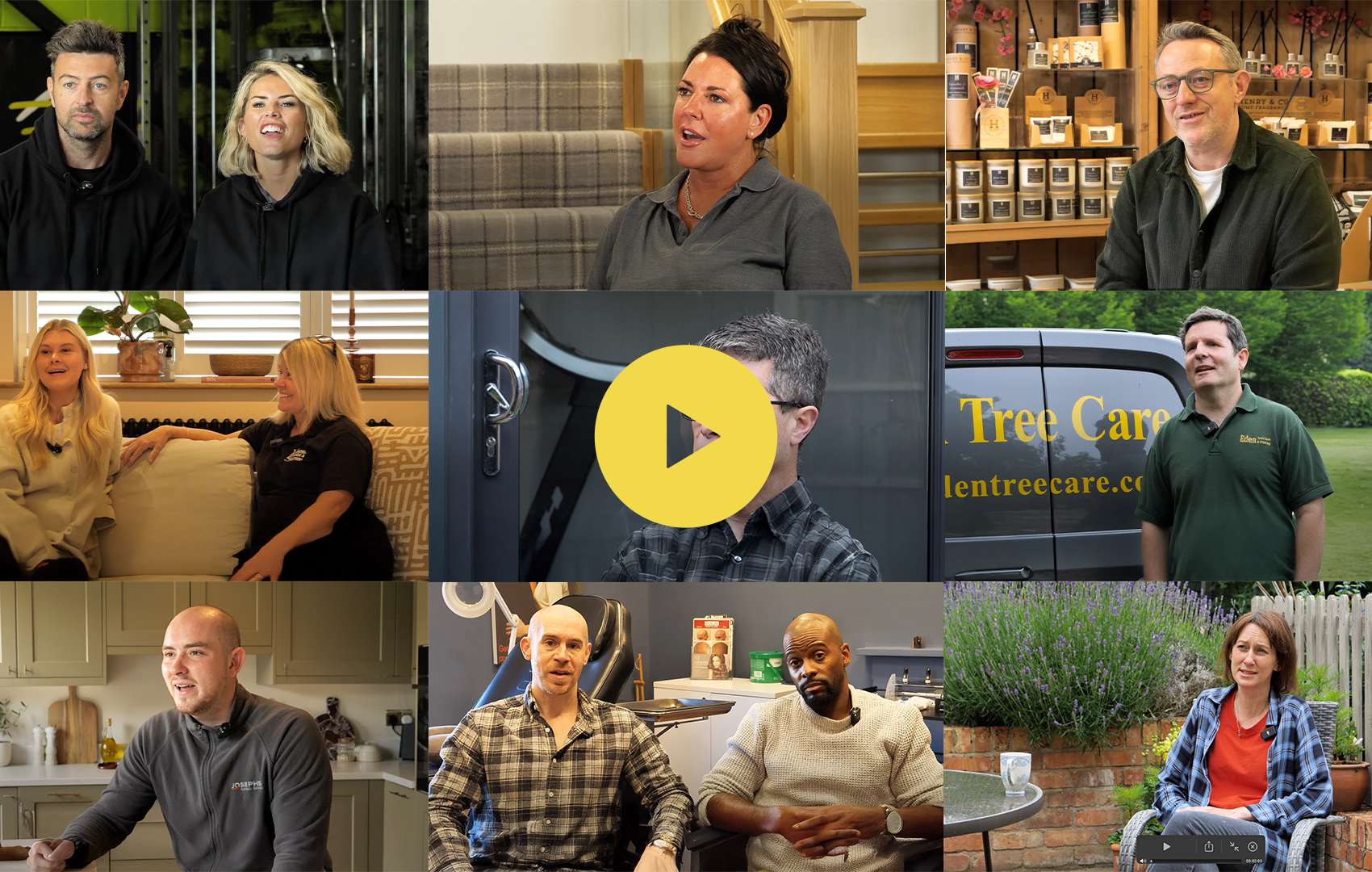
real stories. real support. real results.
THE NEXT STEP
DISCOVERY SESSION
See the difference between your current setup and performance-first delivery - and what that change would mean for your enquiries and revenue.
THE RECEIPTS: WHAT REAL CLIENTS THINK
THIS IS WHY WE EXIST, STORIES LIKE THESE
Live Google & Trustpilot reviews - exactly as clients left them. No edits. No selection.
READ FULL STORY - BEFORE, DURING AND AFTER
These Aren’t Just Success Stories. They’re Turning Points.
Before the testimonials and results, there were messy backstories. Websites that didn’t convert. Content that didn’t work. Growth that felt harder than it should. These case studies break down what wasn’t working, the decisions that changed everything, and how those changes played out in the real world.